00:00:00:00
Roughcut
Next clip/
Home
The first three seconds, frame by frame
Ria Sen6 min read
What happens in the opening of a short video that holds 80% of its viewers, and what happens in one that loses half.
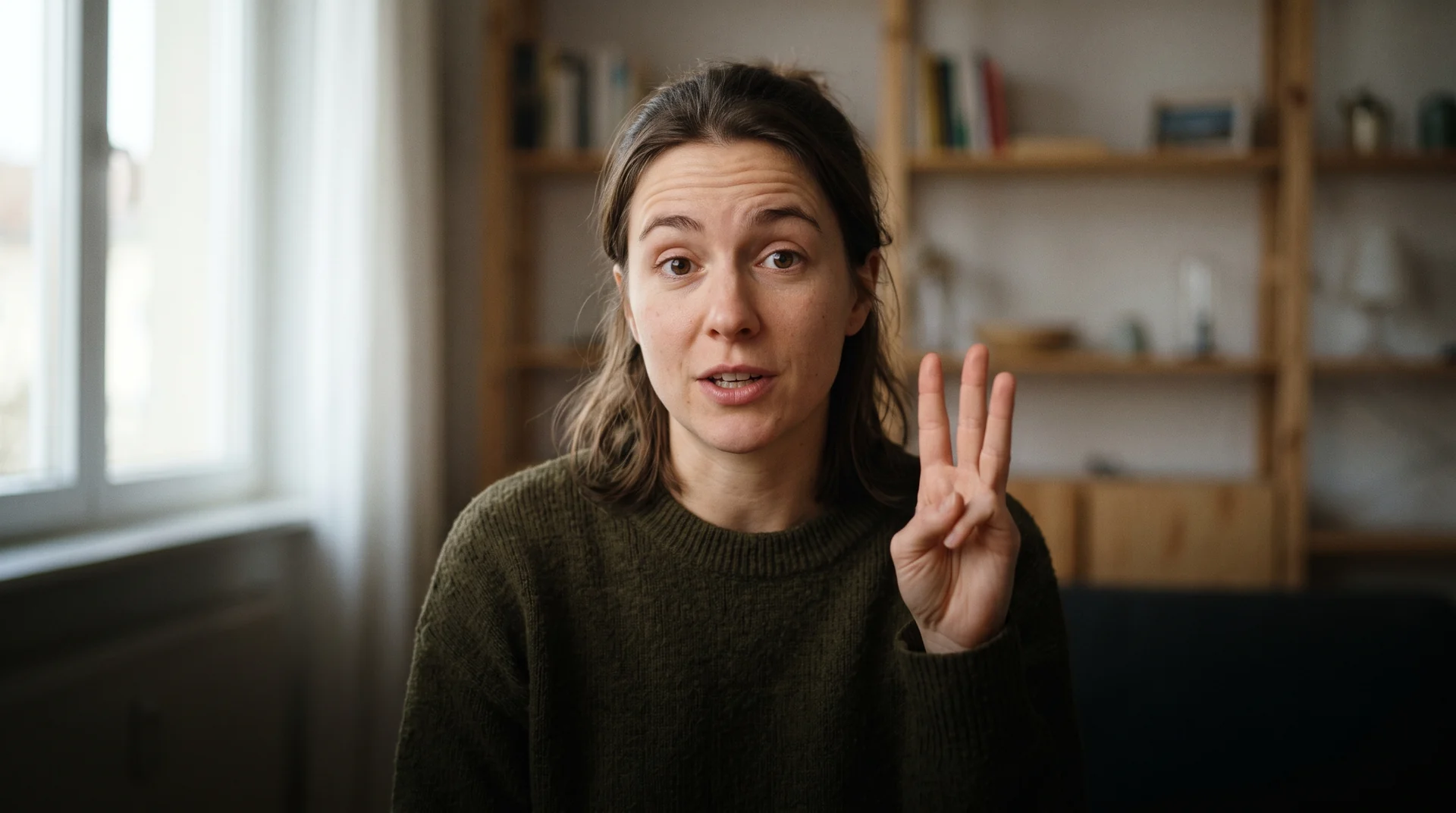
Most short videos are decided before the first sentence ends. We went back through two hundred of our own edits and marked the exact frame where viewers left, then compared the ones that held 80% of their audience with the ones that lost half.
The pattern
The videos that held their audience put the point of the video in the first second, in words and on screen. The ones that lost viewers opened with a greeting, a logo or a slow push in.
- Second zero: the claim, spoken and captioned
- Second one: a cut, a zoom or a change of angle
- Second three: the first proof that the claim is true
What we change first
When a creator sends us a video that is not holding, we rarely touch the middle. We look for the strongest sentence in the whole recording, wherever it sits, and move it to the front. Then we cut everything between that sentence and the first piece of proof.
If the best line is at second forty, the video starts at second forty.
The caption counts as a frame
On a muted feed the caption is the opening shot. One or two words at a time, large, in the upper third where the interface does not cover it. A full sentence on screen reads as a wall and gets skipped.
A test you can run today
Export the same video with two different first lines and post them a week apart at the same hour. Compare the three-second retention, nothing else. In our edits the better opening wins by fifteen to thirty points, and the rest of the graph follows it.
The first three seconds, frame by frame
Ria Sen6 min read
What happens in the opening of a short video that holds 80% of its viewers, and what happens in one that loses half.
Most short videos are decided before the first sentence ends. We went back through two hundred of our own edits and marked the exact frame where viewers left, then compared the ones that held 80% of their audience with the ones that lost half.
The pattern
The videos that held their audience put the point of the video in the first second, in words and on screen. The ones that lost viewers opened with a greeting, a logo or a slow push in.
- Second zero: the claim, spoken and captioned
- Second one: a cut, a zoom or a change of angle
- Second three: the first proof that the claim is true
What we change first
When a creator sends us a video that is not holding, we rarely touch the middle. We look for the strongest sentence in the whole recording, wherever it sits, and move it to the front. Then we cut everything between that sentence and the first piece of proof.
If the best line is at second forty, the video starts at second forty.
The caption counts as a frame
On a muted feed the caption is the opening shot. One or two words at a time, large, in the upper third where the interface does not cover it. A full sentence on screen reads as a wall and gets skipped.
A test you can run today
Export the same video with two different first lines and post them a week apart at the same hour. Compare the three-second retention, nothing else. In our edits the better opening wins by fifteen to thirty points, and the rest of the graph follows it.
The first three seconds, frame by frame
Ria Sen6 min read
What happens in the opening of a short video that holds 80% of its viewers, and what happens in one that loses half.
Most short videos are decided before the first sentence ends. We went back through two hundred of our own edits and marked the exact frame where viewers left, then compared the ones that held 80% of their audience with the ones that lost half.
The pattern
The videos that held their audience put the point of the video in the first second, in words and on screen. The ones that lost viewers opened with a greeting, a logo or a slow push in.
- Second zero: the claim, spoken and captioned
- Second one: a cut, a zoom or a change of angle
- Second three: the first proof that the claim is true
What we change first
When a creator sends us a video that is not holding, we rarely touch the middle. We look for the strongest sentence in the whole recording, wherever it sits, and move it to the front. Then we cut everything between that sentence and the first piece of proof.
If the best line is at second forty, the video starts at second forty.
The caption counts as a frame
On a muted feed the caption is the opening shot. One or two words at a time, large, in the upper third where the interface does not cover it. A full sentence on screen reads as a wall and gets skipped.
A test you can run today
Export the same video with two different first lines and post them a week apart at the same hour. Compare the three-second retention, nothing else. In our edits the better opening wins by fifteen to thirty points, and the rest of the graph follows it.
More notes
Notes from the timeline.
What we learn cutting a few hundred videos a month, written down so your next upload holds longer.
All notes- Short form00:06:00
 6 min read
The first three seconds, frame by frame
What happens in the opening of a short video that holds 80% of its viewers, and what happens in one that loses half.
Ria Sen - Process00:05:00
 5 min read
How to send footage an editor can use
Five habits that save a day on every edit: file names, a brief in four lines, room tone and two more.
Maya Reyes - YouTube00:08:00
 8 min read
Reading a retention graph without fooling yourself
Dips, bumps and the flat line everyone wants: what each shape in the graph is telling you about the edit.
Maya Reyes
More notes
Notes from the timeline.
What we learn cutting a few hundred videos a month, written down so your next upload holds longer.
All notes- Short form00:06:006 min read
The first three seconds, frame by frame
What happens in the opening of a short video that holds 80% of its viewers, and what happens in one that loses half.
Ria Sen - Process00:05:005 min read
How to send footage an editor can use
Five habits that save a day on every edit: file names, a brief in four lines, room tone and two more.
Maya Reyes - YouTube00:08:008 min read
Reading a retention graph without fooling yourself
Dips, bumps and the flat line everyone wants: what each shape in the graph is telling you about the edit.
Maya Reyes
More notes
Notes from the timeline.
What we learn cutting a few hundred videos a month, written down so your next upload holds longer.
All notes- Short form00:06:006 min read
The first three seconds, frame by frame
What happens in the opening of a short video that holds 80% of its viewers, and what happens in one that loses half.
Ria Sen - Process00:05:005 min read
How to send footage an editor can use
Five habits that save a day on every edit: file names, a brief in four lines, room tone and two more.
Maya Reyes - YouTube00:08:008 min read
Reading a retention graph without fooling yourself
Dips, bumps and the flat line everyone wants: what each shape in the graph is telling you about the edit.
Maya Reyes

Your turn
Send the footage.
Upload the raw files today. The first cut is back before the week is out, with the hook rebuilt and the captions in.
- 1,900+videos cut
- 72 hto the first cut
- 4.9 / 5client rating
Sample projects
Your turn
Send the footage.
Upload the raw files today. The first cut is back before the week is out, with the hook rebuilt and the captions in.
- 1,900+videos cut
- 72 hto the first cut
- 4.9 / 5client rating
Sample projects
Your turn
Send the footage.
Upload the raw files today. The first cut is back before the week is out, with the hook rebuilt and the captions in.
- 1,900+videos cut
- 72 hto the first cut
- 4.9 / 5client rating
Sample projects